Most cat owners do not resent their cats. They resent the scoop. The daily ritual of kneeling beside a plastic tray, breathing in what the tray holds, and negotiating with a cat who has strong opinions about cleanliness is the part of pet care that quietly wears people down. That is why the search for the best self cleaning litter box has become one of the most common research projects in modern pet households. The promise is simple: let a machine handle the unpleasant part while you get on with your day.
The reality is more nuanced. Automatic boxes vary enormously in how they sense a cat, how they contain odor, and how much attention they demand when something jams. A unit that looks sleek in a product photo can turn into a source of stress if it is sized wrong or placed badly. This article walks through what actually separates a dependable automatic box from an expensive experiment, focusing on the things owners notice after the novelty wears off.
Why Scooping Fatigue Is a Design Problem, Not a Discipline Problem
When owners skip scooping, they usually blame themselves. In practice, the friction is built into the tray. A standard box requires a person to remove clumps before they harden, refresh litter before it thins out, and scrub the base before residue bonds to plastic. Miss a day and the smell compounds. Miss a week and the box becomes a project nobody wants to start.
An automatic unit changes the rhythm of that work rather than eliminating it. The machine sifts after each use, deposits waste into a sealed compartment, and keeps the litter bed level. What remains for the owner is a lighter schedule: emptying a drawer, topping up litter, and wiping surfaces occasionally. Understanding that distinction matters, because buyers who expect zero maintenance tend to be disappointed, while buyers who expect reduced maintenance tend to be satisfied.
What Owners Actually Complain About
Read enough reviews and the same themes surface. Cats that refuse to enter a box with a low ceiling. Sensors that trigger while the cat is still inside, causing a pause that scares the animal. Waste drawers that seal poorly and let odor escape. Bags that tear during removal. None of these complaints are about automation itself. They are about execution, and each one points to a specific feature worth checking before purchase.
What Separates a Dependable Unit From a Costly Experiment
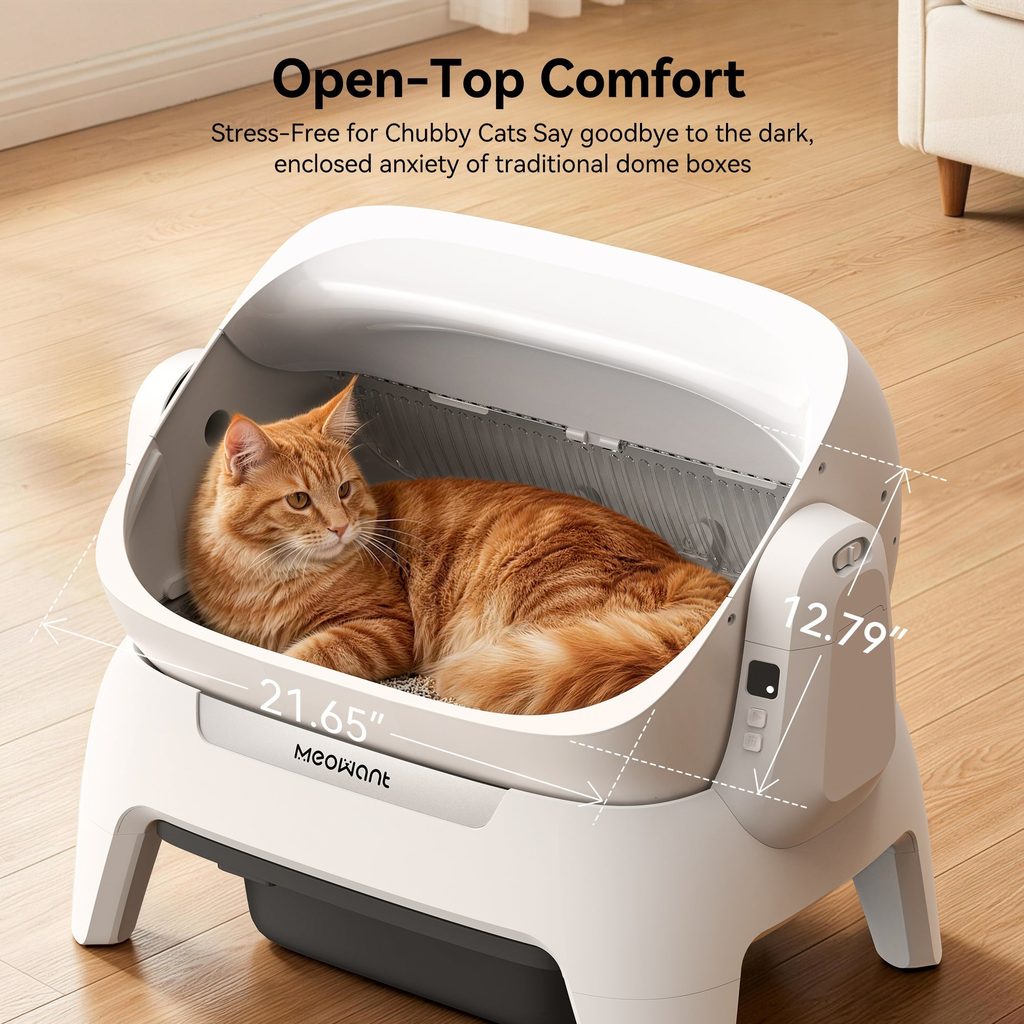
The first thing to examine is entry comfort. Cats are cautious animals, and a box they find intimidating will be avoided no matter how clever the mechanism is. An open-top design removes the moment of hesitation at the entrance, which matters in households with older cats, large cats, or cats that have never used an enclosed box. Pay attention to interior height as well, since a cat needs room to turn around without crouching.
Sensor logic is the second pillar. A good unit confirms the cat has left before it begins to cycle, and it should hold position if motion resumes. Cheap timing-based designs cycle on a fixed clock and are the usual source of frightened-cat stories. Look for weight or infrared detection that pauses instantly, plus a manual cycle button so you can intervene when needed.
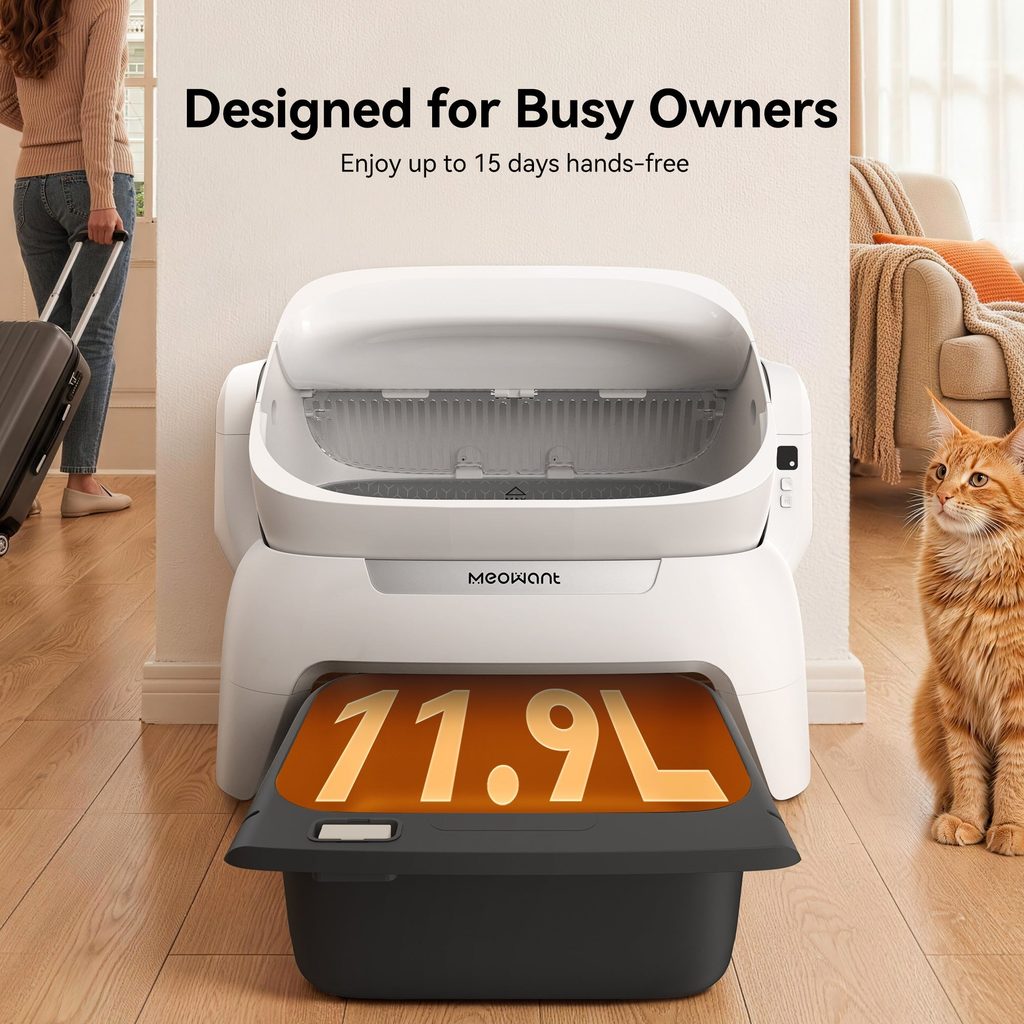
Waste containment is the third. The drawer should close against a gasket, use a liner that does not snag, and hold enough volume that a multi-cat home is not emptying it twice a day. A quick-release drawer that slides out and back without alignment fiddling sounds minor until you have done it hundreds of times.
Sizing, Sensor Logic, and Waste Sealing
Measure your cat before you measure your room. Entry width, interior depth, and the height of the litter bed all affect whether a cat feels secure. For reference, models such as the Meowant self-cleaning box are built around an open, roomy entry with a wide litter surface, which suits cats that dislike feeling boxed in. Then confirm the sensor behavior and the drawer seal, because those two details determine whether the unit feels reliable or temperamental in daily use.
Matching the Unit to Your Cat’s Habits
A household with one calm adult cat has different needs than a home with three cats of different ages. Multi-cat homes generate more waste volume and more traffic, so drawer capacity and cycle speed matter more than extra features. Senior cats benefit from a low entry lip and a stable base, since jumping and balancing become harder with age. Kittens are often fine with automation, but supervision during the first weeks helps them build confidence.
Watch how your cat uses the current box before you switch. Does it hang over the edge? Dig aggressively? Prefer a corner? Each habit suggests a feature. Over-the-edge urinators need a higher rim. Aggressive diggers need a litter bed deep enough to absorb the excavation. Corner users need a footprint that fits where the box already sits, because relocating a box is often the real reason a cat rejects it.
Transitioning deserves patience. Place the new unit beside the old one, keep both available, and let curiosity do the work. A cat that investigates on its own terms will adopt the new box faster than one that is placed inside and left to figure it out.
The Maintenance Rhythm That Keeps It Running
Automation shifts work rather than removing it. A realistic routine looks like this: empty the waste drawer every few days depending on cat count, top up litter to the marked line, and wipe the interior surfaces weekly with a mild pet-safe cleaner. Once a month, take the removable parts apart for a deeper wash and check that no clumps have bonded to corners.
Litter choice affects performance more than most owners expect. Fine clumping clay sifts cleanly and forms firm clumps, which keeps the mechanism from dragging soft waste through the bed. Crystal litters can work but behave differently under a sifting rake. Whatever you choose, stay consistent, because a sudden switch can confuse both the cat and the machine’s timing assumptions.
Error messages and pauses are usually informative rather than fatal. A unit that stops mid-cycle because it senses weight is doing its job. A drawer sensor that complains after a bag change usually means the liner is bunched at the edge. Learning the two or three signals your model gives saves a lot of unnecessary worry.
When Automation Is the Wrong Answer
There are homes where a self-cleaning box adds more stress than it removes. Cats with medical conditions that require monitoring of urine and stool output are better served by a manual box, where every deposit is visible. Extremely nervous cats may never accept the sound of a motor, and forcing the issue creates litter box avoidance that is far worse than scooping.
Budget also deserves honesty. An automatic unit costs more upfront and will eventually need replacement parts. If the alternative is a well-maintained manual box scooped twice daily, a good manual setup can be perfectly hygienic. Automation is a convenience purchase, and it makes sense when the daily friction is genuinely affecting your routine or your willingness to keep the box clean.
Questions Worth Asking Before You Buy
Ask how the unit behaves during a power outage, whether the waste drawer uses proprietary liners, and how replacement parts are priced. Confirm the return window and whether the seller accepts returns after the box has been used, because a cat’s rejection is the most common reason for returns. Check the warranty length on the motor and sensors specifically, not just the shell.
Finally, consider where the box will live. An automatic box needs a level surface and a nearby outlet, and it should sit somewhere the cat can reach without navigating a crowd. A quiet corner with good ventilation reduces odor and gives the cat privacy. Getting the placement right on day one prevents most of the problems that reviews blame on the machine.
A Cleaner Home Without the Daily Chore
The best self cleaning litter box is not the one with the longest feature list. It is the one your cat enters without hesitation, that cycles without startling anyone, and that you can service in under a minute. Judge candidates by entry comfort, sensor reliability, and waste sealing before you look at app features or styling. Then match the unit to your household’s actual traffic and your cat’s actual habits, and give the transition a couple of weeks.
Done well, automation returns something valuable: a home that smells neutral, a box that stays clean between deep washes, and a daily routine that no longer revolves around a scoop. The machine does not replace care. It removes the friction that makes care easy to postpone, and that is the real benefit worth paying for.