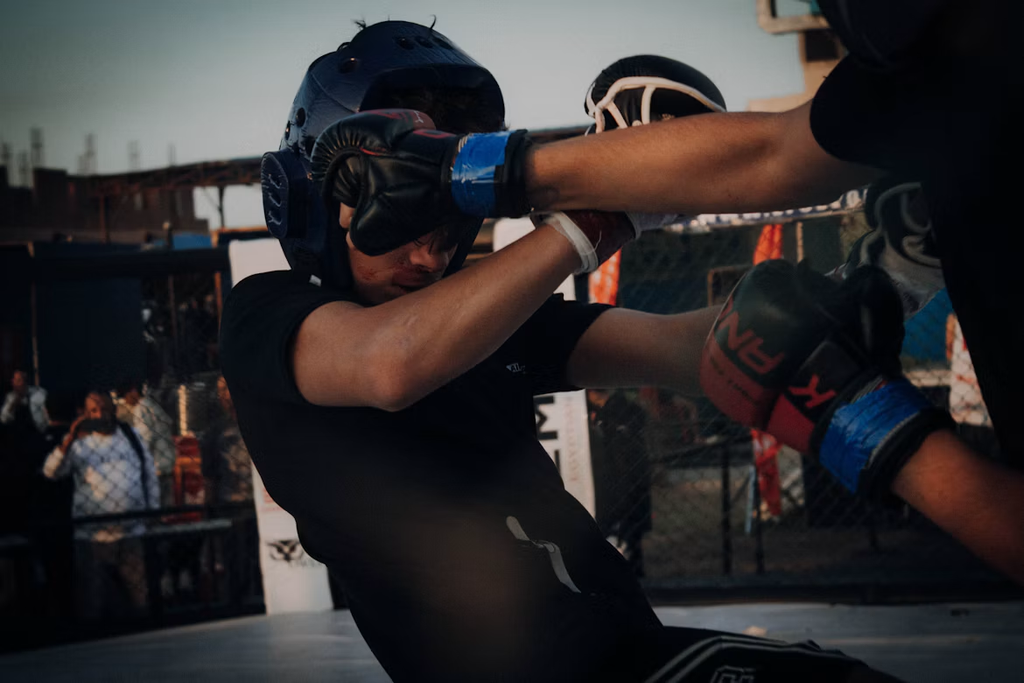
Stance & Balance: The Unshakable Foundation
When most people think of fight techniques, they jump straight to punches or kicks, but every single move starts with your stance and balance. I learned this the hard way back in 2019, when my friend Jake got jumped outside a convenience store. He’d taken a single weekend martial arts class a month prior, but his stance was all wrong: he stood flat-footed, feet together, chest puffed out like he was posing for a photo. When one of the attackers shoved him, he didn’t just stumble—he went crashing to the ground, and the other guy landed two quick punches to his face before he could react. A year later, Jake took a proper self-defense course, and his first lesson was re-learning his stance. A good fighting stance isn’t about looking tough; it’s about stability and mobility. Feet should be shoulder-width apart, one foot slightly forward (about 6-12 inches), knees bent just enough to keep weight on the balls of your feet—never heels. Your core should be engaged, not stiff, so you can shift weight quickly. This stance lets you move left, right, forward, or back in half a second, and it prevents you from being pushed over easily. Another time, I watched a street fight where a guy tried to tackle another; the guy with the proper stance didn’t get knocked off balance because his weight was spread evenly, while the tackler’s rigid stance made him fall forward when he missed. Common mistakes here are standing too close (which limits movement) or too far (which makes you off-balance). Even in casual situations, maintaining a good stance helps you stay calm—if you’re slouching, you’ll feel more vulnerable, but a stable stance gives you a sense of control. Balance isn’t just for standing still; it’s for striking too. If you overextend a punch, you lose balance, and an attacker can counter immediately. That’s why so many street fights end with one punch knocking someone out—they overextended, leaving their chin open and their body off-balance. So stance is the first thing to master, boxing vs kickboxing because without it, every other technique is useless.
Striking: Precision Over Raw Force
Striking is what most people associate with fighting, but here’s a secret: the hardest punch isn’t the one you swing with all your might—it’s the one you land exactly where you want, when you want. I saw a perfect example of this last year in a bar security video. A guy got into an argument with a bouncer, and instead of throwing a wild haymaker that would have left him open, he used a quick jab to the bouncer’s eye. The jab was fast, not powerful, but it distracted the bouncer enough that he could slip a cross to the jaw. The bouncer went down immediately, not because the punch was hard, but because it hit the right spot—an unprotected jaw, which is a knockout point. Let’s break down key strikes and when to use them. The jab is your fastest strike; it’s meant to test the attacker’s defense, not knock them out. You generate it from your front foot pushing off, not just your arm extending—this adds speed and power without overextending. The cross is your power strike, but it comes from your back foot pushing, so you have to keep your weight shifted back until the last second. A palm strike is way better than a punch for street fights because it’s safer for your hand (you’re not hitting with knuckles, which can break if you hit a hard surface like a skull) and more forceful. When you palm strike, you use your whole arm, core, and even your leg to drive the force—this is why a palm strike to the nose can stop an attacker in their tracks. Elbows are a close-quarters weapon; if someone is grabbing you, an elbow to the ribs or temple can disable them quickly. I once saw a woman at a bus stop use an elbow to stop a guy from grabbing her bag—he was inches away, and she swung an elbow backward, hitting his chest, and he let go immediately. Common mistakes with striking: swinging wildly, overextending, or targeting the wrong spot. A friend of mine, who’s a boxer, told me about a sparring partner who always threw big overhand punches; he’d miss, and my friend would counter with a hook to the temple every time. That’s why precision matters—you don’t need to hit hard, you need to hit accurately. Even a small strike to the right spot can end a fight, while a big wild strike can leave you vulnerable.
Clinch & Grappling: Close-Quarter Control
Street fights rarely stay at a distance; they quickly move to close quarters, where striking is hard, and grabbing becomes common. That’s where clinch and grappling techniques come in, especially for smaller people who can’t rely on strength. My cousin Maria, who’s 5’4” and 120lbs, had to use a clinch last year when a guy tried to grab her backpack. She didn’t want to punch him—he was 6’ and 180lbs, so strength wasn’t on her side. Instead, she wrapped her arms around his torso, pulled him close, and used her weight to push him backward. He couldn’t swing his arms freely because she was holding him tight, and when he tried to pull away, she shifted her weight to the side, making him stumble. He let go of the bag and ran. The clinch is the phase where you’re in close contact, not on the ground, and control here is key. Basic clinch moves include underhooks (wrapping your arm under the attacker’s arm to control it) and overhooks (wrapping over their arm to pull them in). If you get taken down to the ground, you need to protect yourself—guard position is where you lie on your back, legs wrapped around the attacker’s waist, keeping them away with your feet. But in a street fight, ground is dangerous because bystanders might get involved, or the attacker might have a weapon, so your goal should be to get back to your feet as soon as possible. A guy I know who does Brazilian Jiu-Jitsu (BJJ) told me about a time he was attacked at a party; someone grabbed him from behind, trying to choke him. He used a rear naked choke setup, but instead of finishing it (which could hurt the guy badly), he used the hold to make him let go of him. Leverage is everything in grappling—you don’t need to be strong; you need to use the attacker’s weight against them. For example, if someone is bigger than you, pulling them forward instead of pushing them back can make them lose balance. Another example: a 110lb woman can lift a 170lb man off the ground with a proper takedown, because she’s using his momentum against him. Grappling isn’t just about fighting; it’s about controlling the situation without hurting someone more than necessary, which is important in self-defense where you don’t want to escalate things.
Defensive Rhythm: Evade, Block, Counter
Defense is often overlooked, but it’s the difference between getting hurt and escaping. The rule here is simple: Evade first, block only if you can’t evade, then counter immediately. I saw this play out in a subway incident last month. A guy started yelling at an older woman, then swung a punch at her face. She didn’t try to block with her arms—blocking would have hurt her, and she might have lost the punch’s force. Instead, she evaded by stepping quickly to the side, away from the punch. The guy’s momentum made him stumble forward, so she followed with a quick palm strike to his nose. He grabbed his face, and she moved to the door, getting off at the next stop. That’s exactly the rhythm: evade, counter. Evading is better than blocking because it saves your energy and keeps you out of the attacker’s strike path. Evasion can be a step, a lean back, a duck, or even a small shift of your body—you don’t need to move far, just enough to miss the strike. Blocking is for when you can’t move, like if someone is too close to step away. A good block uses your forearm, not your hand—your forearm is harder, so it can absorb the impact without hurting you. For example, if someone punches your chest, blocking with your forearm is better than using your hand. The key after blocking is to counter right away—if you just stand there after blocking, the next punch is coming. A retired cop neighbor told me about a time he was attacked with a baseball bat. He evaded the swing by leaning back, then grabbed the bat with both hands, twisted it out of the attacker’s grip, and disarmed him. That’s a perfect counter: evaded, then took control. Another important part of defense is reading the attacker’s cues. A punch starts with the shoulders, not the arm—so if you see the attacker’s shoulder shift, you can start evading before the punch even leaves their hand. A common mistake people make is freezing when they’re attacked—they stand there, too shocked to move. That’s why practicing evasion and countering in low-stakes situations is important, so it becomes instinct. If you freeze, you can’t do anything, but if your body knows what to do, you’ll react without thinking.
Training: Turning Skills Into Instinct
None of these techniques matter if you don’t practice them. A one-day self-defense class teaches you the basics, but muscle memory comes from consistent practice. My friend Tom learned this the hard way. He took a 2-day self-defense course, where he practiced jabs and palm strikes on a heavy bag. A month later, he got into a fight with a guy who was twice his size. He tried to throw a jab, but he’d only practiced it a few times, so it was slow and off-target. The bigger guy dodged it, and Tom couldn’t recover fast enough. He lost the fight, and later told me he should have practiced more. On the flip side, my neighbor Lisa practices 20 minutes every morning: she does stance shifts, palm strikes, and evasion steps. Last year, she was attacked by a guy who tried to grab her at an ATM. She evaded his grab, struck his arm with a palm strike, and ran. She said it felt natural, not like she was thinking—her body just did what she’d practiced. That’s the power of muscle memory: when you practice a technique enough, your brain doesn’t have to process it, it just reacts. You don’t need to train for hours; even 15-20 minutes a day, 5 times a week, is better than a 2-hour session once a month. What should you practice? Stance drills (shifting weight, moving left/right), striking with focus mitts (to practice accuracy), clinch work with a partner, and evasion drills (stepping away from a partner’s fake punches). Sparring is also important, but it’s not about fighting—it’s about practicing techniques in a dynamic situation, where the attacker isn’t a stationary bag. A common training mistake is only practicing powerful strikes, not precise ones. If you only practice swinging hard, you’ll overextend in a real fight, which leaves you open. Another mistake is sparring too hard, which teaches you to rely on strength instead of technique. Good training is about slow, deliberate practice at first, then building speed as you get better. For example, when practicing a jab, start slow, focusing on form, then gradually increase speed until it’s as fast as you can make it. Consistency is key here—even small, regular practice will make a huge difference when you’re in a stressful situation, where adrenaline makes it hard to think clearly. If you’ve practiced enough, your body will do the right thing without you having to decide.