In today’s fast – paced world, stress has become an inevitable part of our lives. Whether it’s the pressure at work, the chaos of daily life, or the challenges we face, finding effective ways to relieve stress is crucial. One increasingly popular solution is stress – relief toys. These small, often handheld items can provide a quick and easy way to relax and unwind. explore stress relief toys Let’s take a deep dive into the world of stress – relief toys.
The Science Behind Stress Relief Toys
Stress relief toys work on several psychological and physiological levels. Psychologically, they can distract us from the source of our stress. fruit-filled squishy toy When we focus on manipulating a stress ball or fidgeting with a sensory toy, our minds are taken away from the worries and anxieties that are causing stress. For example, if you’re in a high – pressure meeting and start squeezing a stress ball under the table, your attention is diverted from the tense situation, allowing you to calm down.
Physiologically, many stress relief toys involve physical movement. Squeezing a stress ball, for instance, engages the muscles in our hands and arms. This physical activity can trigger the release of endorphins, which are natural mood – elevating chemicals in the body. Endorphins can create a sense of well – being and reduce the perception of pain and stress. A study conducted on office workers found that those who used stress balls during breaks reported lower levels of stress and higher job satisfaction compared to those who didn’t.
Types of Stress Relief Toys
Stress Balls: These are perhaps the most well – known stress relief toys. They come in various shapes, sizes, and materials. Some are filled with foam, while others have a gel – like substance inside. The act of squeezing a stress ball repeatedly helps to release tension in the hands and arms. For example, a person who spends long hours typing at a keyboard can use a stress ball to relieve the muscle strain and stress associated with repetitive motion. There are also scented stress balls available, which can provide an additional sensory experience and further enhance relaxation.
Fidget Spinners: Fidget spinners became extremely popular a few years ago. They typically consist of a central bearing with weighted arms that spin around it. The smooth spinning motion can be very soothing and can help improve focus. Students often use fidget spinners in class to help them concentrate better. For instance, a student who has trouble sitting still during a long lecture may find that twirling a fidget spinner in their hand allows them to stay more engaged in the lesson without being overly distracting to others.
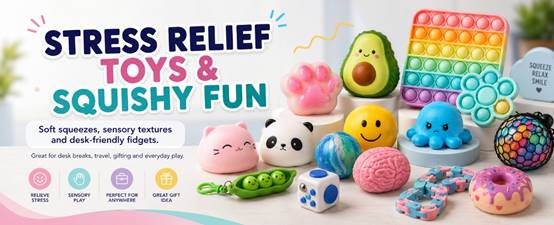
Pop – It Toys: These toys are made of silicone with small, bubble – like bumps that can be popped in and out. The satisfying popping sound and the tactile sensation of pushing the bubbles are very appealing. They are great for people who need a quiet way to relieve stress. For example, in a library or a quiet office environment, a person can discreetly use a pop – it toy to calm their nerves without making much noise.
Sensory Putties: Sensory putties, such as slime or kinetic sand, offer a unique tactile experience. Slime can be stretched, squished, and molded into different shapes. The act of working with the putty can be very therapeutic. Children often enjoy playing with slime as a form of stress relief, but adults can also benefit from it. For example, an adult who has had a long day at work can sit down and play with slime to unwind and let go of the day’s stress.
Benefits of Using Stress Relief Toys
Improved Focus and Concentration: As mentioned earlier, stress relief toys can help improve focus. When we’re stressed, our minds tend to wander, and it becomes difficult to concentrate on tasks. By using a stress relief toy, we can channel our nervous energy into a simple, repetitive action. For example, a writer who is struggling to focus on their work may find that rolling a small ball between their fingers helps them stay on track and be more productive.
Reduced Anxiety: Stress relief toys can significantly reduce anxiety levels. The physical and sensory experiences they provide can have a calming effect on the mind. For someone with social anxiety, carrying a small stress relief toy like a keychain fidget can give them something to do with their hands during social interactions, which can make them feel more at ease.
Enhanced Mood: The release of endorphins triggered by using stress relief toys can lead to an improved mood. After a long and tiring day, playing with a stress – relief toy for just a few minutes can lift your spirits. For instance, a person who is feeling down can use a scented stress ball and enjoy the pleasant smell while squeezing it, which can make them feel happier.
Better Sleep: Using stress relief toys before bedtime can help relax the body and mind, leading to better sleep. For example, gently kneading a soft stress ball while lying in bed can help you unwind and prepare for a restful night’s sleep. A person who suffers from insomnia may find that incorporating a stress – relief toy into their bedtime routine improves the quality of their sleep over time.
Choosing the Right Stress Relief Toy
Consider Your Preferences: Everyone has different preferences when it comes to sensory experiences. If you like the feeling of soft and squishy materials, then a stress ball or sensory putty may be a good choice for you. On the other hand, if you prefer a more mechanical and repetitive motion, a fidget spinner or a pop – it toy might be more suitable. For example, someone who enjoys the sound of clicking may opt for a fidget toy with clickable buttons.
Think About the Environment: The environment in which you’ll be using the stress relief toy is also important. If you’re in a quiet place like a library, you’ll want to choose a toy that makes little to no noise. Pop – it toys or small, silent fidget cubes are great options in such situations. However, if you’re at home or in a more relaxed environment, you can choose a toy that makes more noise, like a slinky or a noisy stress ball.
Budget: Stress relief toys come in a wide range of prices. You can find simple stress balls for a few dollars, while more elaborate or high – end fidget toys may cost upwards of $20 or more. Set a budget based on how much you’re willing to spend. For example, if you’re on a tight budget, you can look for affordable stress balls or make your own sensory putty using simple ingredients like glue and borax.
Stress Relief Toys in Different Settings
In the Workplace: In a work environment, stress relief toys can be very beneficial. Employees can use them during breaks or even at their desks to relieve stress and improve productivity. For example, in a call – center environment where employees face high – pressure situations dealing with customers, stress balls can be placed on each desk. Employees can squeeze them when they feel frustrated or overwhelmed, which can help them stay calm and provide better customer service.
In Schools: Schools are also starting to recognize the value of stress relief toys. Teachers can provide fidget toys to students who have trouble sitting still or concentrating. For example, in a special education classroom, students with attention – deficit/hyperactivity disorder (ADHD) can use fidget spinners or sensory putties to help them focus during lessons. This can lead to better academic performance and a more positive learning experience for the students.
At Home: At home, stress relief toys are a great way to unwind after a long day. Family members can use them during family time or while relaxing alone. For example, parents can play with their children using a pop – it toy, which can strengthen the parent – child bond while also providing a fun and stress – relieving activity for everyone. And for an individual who wants some alone time to relax, they can use a scented stress ball while reading a book or watching TV.
In conclusion, stress relief toys offer a simple yet effective way to manage stress in various aspects of our lives. By understanding the different types, benefits, and how to choose the right one, we can make the most of these little helpers to lead happier, more relaxed lives.