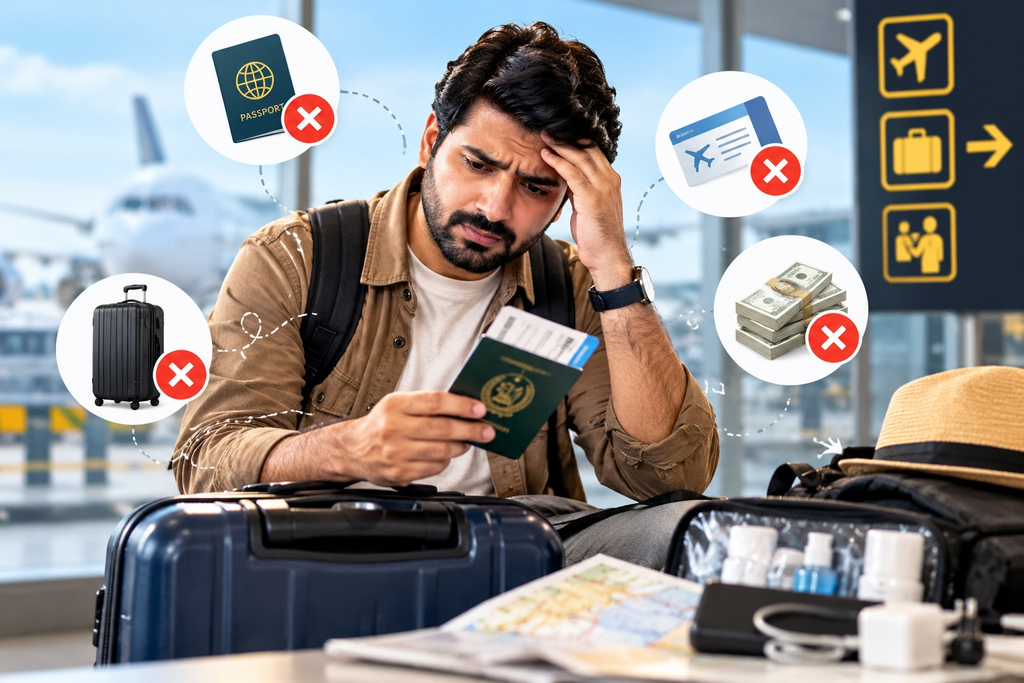
Millions of Muslims perform Hajj, one of the five pillars of Islam, seeking Allah’s pardon, strengthening their faith and completing a religious obligation. But Hajj is about religious rituals, long walks, crowded places, and detailed travel preparations.
Many pilgrims, particularly first-timers, face problems due to poor preparation, misconceptions about religion and ignorance about Makkah, Mina, Arafat and Muzdalifah conditions.
Mistakes can interfere with Hajj ceremonies, lead to tiredness, confusion, additional expenses, or safety concerns. It can be a big help to understand these issues before you leave.
The book includes religious rituals, health tips, transportation, packing and practical preparation advice to avoid the 15 most common Hajj mistakes.
1. Ignorance of Hajj Rituals
One of the most serious mistakes committed during Hajj is to start it without knowing the rites and their order. Some Hajj pilgrims rely on their group leaders and look for directions at every step.
Pilgrims should know the basics of Ihram, Tawaf, Sa’i, Wuquf at Arafat, Muzdalifah and Rami al-Jamarat even with the help of professional guides.
Lack of information can confuse where to go, which rites to perform, when certain things are done. Pilgrims may also have trouble distinguishing required actions from suggested ones.
To avoid this mistake
- Take a course on Hajj and read a reliable book before you go. It is important to know the order of the rituals and the acts which make the Hajj valid.
- Pakistani pilgrims are given proper training and orientation as part of the Hajj procedures.
- Have a small notebook or phone with a short Hajj ritual checklist. If you have religious problems, don’t take advice from social media but look for an Islamic scholar.
2. Mistakes in Ihram
Ihram is the sacred state in which pilgrims begin their Hajj or Umrah. Many people believe they have entered Ihram by putting on the two white clothes.
In fact, the pilgrimage starts with entering Ihram. Islam requires women to dress modestly, and men to wear Ihram.
The other mistake is not entering Ihram at the Miqat. Pilgrims in the air may not know when to prepare and intend.
Pilgrims in Ihram have to observe grooming, attire, smell and other rules.
How To Avoid This Mistake
- Before you leave, find out where the Miqat is and why it is important. If flying, get ready and listen for miqat approach announcements.
- Learn the Talbiyah and say it with the right intention. Ihram restrictions on scent, hair and nails
- There are different types of Hajj (Tamattu, Qiran or Ifrad) with different requirements. The official Nusuk Hajj ceremonies handbook details these pilgrimages and their requirements.
Nusuk (http://www.nusuk.com)
3. Common Mistakes in Tawaf
Tawaf is the circling of the Holy Kaaba 7 times in a counter clockwise direction. One of the most important forms of worship during Hajj.
When Mataf is full, pilgrims may be confused to count circuits. Others shove through hordes of people to get to Hajar al-Aswad, the Black Stone.
This act can put worshipers in danger and cause them inconvenience.
Pilgrims can become so focused on getting to a destination that they lose track of what is going on around them or lose contact with their companions.
To prevent this mistake
- Know the starting point and direction before starting Tawaf. The seven circuits can be counted by simple enumeration.
- Do not push your way to Hajar al-Aswad. Kissing or touching the Black Stone is not obligatory for Tawaf and pilgrims should not risk their lives to reach it.
- Please stay calm, use the pedestrian paths and follow the mosque staff.
- If you don’t know how many circuits to do, ask your religious school.
4. Error in Sa’i between Safa and Marwah
Sa’i is a commemoration of Prophet Ismail’s mother Hajar (Hagar)’s search of water between Safa and Marwah hills.
Sa’i is the act of pilgrims making seven trips from Safa to Marwah.
Some first-time pilgrims believe that the journey from Safa to Marwah and back is one trek. This confusion might confuse the overall number of journeys.
Other pilgrims rush in random ways, strain themselves or impede others.
To Prevent This Mistake
- Learn the correct counting before starting Sa’i. The first journey is from Safa to Marwah, and the second is the return. (7) The seventh voyage ends at Marwah.
- At a good pace, keeping with religious traditions.
- Pilgrims with disabilities should inquire about wheelchair assistance and accessible pathways.
- No competition with other pilgrims or rushing the process. It is important to ensure that Sa’i is carried out correctly and safely.
5. Not physically ready for Hajj
For those not used to long walks, standing and crowds, Hajj can be very demanding.
Some pilgrims think they can face the physical hardships without preparation. However, walking may be necessary between accommodations, transit, and religious places.
Physical fatigue can reduce concentration, and impair normal activities.
Without health and mobility plans, elderly pilgrims and those with medical conditions may face additional challenges.
How to Fix This Mistake ?
- Start many weeks or months before you travel, gradually increasing how far you walk each day depending on your fitness.
- If you have diabetes, heart disease, breathing problems, mobility issues or any chronic condition, speak to your doctor before you travel.
- Buy some comfortable shoes and wear them in before you go for Hajj. Ensure your Ihram footwear is religiously acceptable.
- Older pilgrims should seek help and stop when tired.
Physical preparedness won’t solve all problems, but it can help pilgrims to get through the journey.
6. Not hydrating and shielding yourself from heat
Heat is a major health threat during the Hajj. Pilgrims can walk or wait for transit or do outdoor activities.
Fluid loss or overheating can cause dehydration and heat-related illness. Symptoms of dehydration can include dizziness, unusual tiredness, dry lips, less urination and dark-colored urine.
Some pilgrims disregard these warnings and complete their jobs without any rest.
Saudi Arabia’s Ministry of Health recommends to drink water, avoid direct sunlight and prevent heat-related illness.
Hajj: Risk of dehydration
To prevent this mistake
- Don’t wait until you’re thirsty, drink water regularly. If you have to limit your fluids, ask your doctor.
- Stay in shady places or air conditioning. Bring an umbrella for direct sunshine.
- Avoid unnecessary outdoor activity in extreme heat. Take frequent breaks and allow your body to recover.
- If you feel dizzy, weak, have a headache or any other symptoms of heat exhaustion, cool down and get medical attention.
- Heat stroke is a medical emergency. If you are exposed to heat and become confused, collapse, have convulsions or lose consciousness, seek emergency medical help. Do not delay the treatment ritual.
7. Errors in Arafat Wuquf
The Day of Arafat on Dhul-Hijjah 9 is an important Hajj phase. The basis of the pilgrimage is Wuquf at Arafat.
During this time, pilgrims worship, pray, remember Allah and reflect in Arafat.
Not understanding the bounds or time of Wuquf is a big mistake. Pilgrims can also be distracted by non-essential activities or scheduling issues of the group.
Some people try to access certain Arafat spots without knowing that there is no need to stand at a landmark.
How to Avoid This Mistake
- Know the religious significance of Arafat and the validity of Wuquf before Hajj.
- Follow the transportation and mobility plans of your Hajj group. Remain within the boundaries of Arafat.
- Spend your time in dua, memory and repentance instead of going on tours.
- You do not have to see or climb Jabal al-Rahmah to make a Wuquf, so do not tire yourself trying to do so.
- If you have any issues regarding schedule or location, see an experienced Hajj guide immediately.
8. Errors in Hotel Muzdalifah
Travelers leave Arafat and perform a mandatory devotion in Muzdalifah before continuing on Hajj.
Usually, there are delays in transportation and crowds. The reason is many pilgrims visit the holy places at the same time.
Some pilgrims do not understand the Muzdalifah arrangements and go away with their groups.
Another misconception is that the pebbles used in Rami al-Jamarat must always be from one area in Muzdalifah.
To Prevent This Mistake
- Before you go, check out religious obligations at Muzdalifah and the arrangements for people with special needs.
- Know where your group is meeting, and how you’re getting around.
- Keep water, ID, prescriptions and phone close by.
- Don’t push people around, don’t go into dangerous areas, collect tiny stones for Rami. The pebbles could be picked up anywhere at Muzdalifah.
- If you are ill, or traveling, or too old or if you have any good reason not to do so, ask a knowledgeable religious guide about the guidelines.
9. Errors in Rami al-Jamarat
One major Mina Hajj ceremony is the stoning of the Jamarat, or Rami al-Jamarat.
During the rite, pilgrims throw small pebbles at Jamarat buildings, in a sequence.
The error is to carry out the rite at the wrong time without official permission. Some run through crowds, throw heavy objects, or approach structures unsafely.
Some pilgrims believe that more power or bigger stones make the ceremony more meaningful.
To Avoid This Mistake
- Know sequence, pebble count, and time before running Rami.
- Use designated pedestrian walkways. Follow crowd management guidance. Cast little stones gently, without hurting the pilgrims.
- Don’t try to push your way through a crowd to get somewhere.
- Old, sick and incapable pilgrims should avail professional help or representation for Rami.
- The rite is a religious rite of obedience and recollection, not violence.
10. What is confusing about sacrifice, haircuts and leaving Ihram?
There are also important practices during Hajj on Dhul-Hijjah 10 such as Rami, sacrifice, shaving or clipping hair and Tawaf al-Ifadah.
First-time pilgrims may confuse these activities with the exit phases of Ihram.
A pilgrim performing Hajj Tamattu or Qiran must make a sacrifice, but Hajj Ifrad has other conditions.
Pilgrims can be confused about when Ihram restrictions are lifted.
To Avoid This Mistake
- Decide before Hajj if you are doing Tamattu, Qiran or Ifrad and study its religious requirements.
- If you need to make a sacrifice, then contact an authorized supplier.
- Halq and Taqsir (Shaving the head and clipping the hair). Learn the rules for men and women.
- Do not think that removing Ihram clothes means that you are free from all restrictions.
- Islamic schools of law differ in the order of rituals, legitimate exceptions, and the discharge of Ihram. You should consult a trained scholar who knows your situation.
11. Too much baggage and useless stuff
Another pitfall of the Hajj pilgrimage is over packing. It is normal to prepare for many possibilities, but having too much luggage can make traveling and visiting holy places difficult.
Pilgrims will usually pack more clothes, electronics and accessories than they will actually use.
Pilgrims who walk long distances or through crowds have problems with heavy loads.
If you pack poorly, you may forget your prescriptions, ID and comfortable shoes.
To prevent this mistake
- Prepare a reasonable Hajj packing list weeks before the trip.
- Dress in comfortable, weather-appropriate clothing for the hike. Keep prescriptions, travel documents, identification and emergency contacts readily available.
- Pack a small, light bag for daily essentials, subject to Hajj site and group requirements.
- Don’t bring extra cash, jewelry or electronics you don’t need.
- Pack light, not heavy. Select health, safety and religious products.
12. Disregarding health and hygiene precautions
The Hajj attracts huge international crowds. Crowded lodging, shared transport and close contact with pilgrims can facilitate respiratory and gastrointestinal diseases.
Tired, busy or unfamiliar with the facilities, pilgrims may not pay attention to basic hygiene.
Some people ignore minor foot injuries, blisters, or signs of illness until they worsen.
Saudi Arabia’s Ministry of Health has warned pilgrims against respiratory diseases, dehydration, heat exhaustion and foot tiredness.
To Avoid This Mistake
- Wash hands with soap and water before and after meals and using toilet. Use hand sanitizer when appropriate.
- Use a mask in crowds and follow respiratory hygiene guidelines.
- Keep feet clean & dry, check for blisters & injuries. Wear the right shoes.
- Do not share personal hygiene products. Consume properly prepared foods and safe water.
- Before you travel, check current Saudi Hajj immunization and health requirements and consult your doctor about any concerns.
- Do not stop taking prescription drugs without medical advice. If you have a persistent fever, trouble breathing, weakness or infection, see a doctor.
13. Lost Touch With Hajj Group
Leaving your Hajj group can be intimidating, especially if this is your first time and you are not yet familiar with Makkah, Mina and other sites.
It can be tough to get around in big crowds, cookie-cutter hotels, and sprawling transit systems.
Some pilgrims leave their lodging without telling their group leader, thinking they can find their way back.
Some are mobile app or internet based only, which may or may not be accessible.
How to Avoid This Mistake
- Have your hotel’s name, address, location and contact info on your phone. Keep a hard copy, in case your phone dies.
- Record your Hajj group ID and meeting points.
- Travel with your group as much as possible, especially during the important rites of pilgrimage.
- Your Hajj operator gave you identification and contact details.
- If you lose your way, stay calm and ask for help from the authorized Hajj or security personnel.
- Do not accept any unauthorized transportation or lodging from strangers.
- Consider a simple contact card with the name, lodging, and telephone number of a responsible companion for older pilgrims.
14. Bad Management of Hajj Time and Transport
Time management is important for Hajj as there are many ceremonies that need to be performed at specific timings.
Travel between Makkah, Mina, Arafat and Muzdalifah can be challenging due to delays, crowds and changes in the group schedule.
Pilgrims can get journey times wrong or leave later than they are told.
Others go on unnecessary solo journeys and risk missing scheduled transport or becoming lost.
Poor preparation means fatigue, confusion and worry, all of them unnecessary.
To Prevent This Mistake
- Review your group’s daily itinerary and estimated departure times.
- Pack up your essentials before moving.
- Listen to announcements from official Hajj and group leaders.
- Do not plan your trip separately so it can conflict with your Hajj plan.
- If you can, allow extra time for queues, walking and security checks.
- Crowd-management needs could affect access restrictions and official transit schedules. Use the most recent instructions.
Knowing about these arrangements before departure from Pakistan or from abroad may help pilgrims to avoid a lot of problems.
15. Ignoring Patience, Manners and Pilgrim Respect
Hajj is not just a physical rite. It also allows for tolerance, humility, self-discipline and kindness.
Long lines, crowded vehicles, lack of sleep and physical fatigue, unfortunately, can make you irritable.
Some of the pilgrims are impatient, arguing about seats, pushing past crowds, ignoring the elderly and the handicapped.
The trip should be about collaboration and respect, not this kind of behavior.
To Avoid This Mistake
- The Hajj will be painful and delayed.
- Wait patiently for transit, lodging, or religious places.
- Don’t start fights you don’t need. Be kind to pilgrims, staff and leaders.
- Help elderly and disabled pilgrims when it is safe to do so.
- Follow the authority orders and keep shared places clean.
Most importantly, remember that Hajj is not just a physical exercise. A person can strengthen his relationship with Allah through worship, self-reflection and good deeds.
The Essential Checklist to Avoid Common Errors During Hajj
Proper preparation can prevent religious misunderstandings, health risks and travel problems. Check out this checklist before your Hajj.
Readiness Checklist
- Learn basic religious rites, their order and the conditions that apply to them to develop religious knowledge.
- Hajj training: Attend orientation courses and consult qualified religious advisors.
- Check travel documents (passport, identity and Hajj visa/permit).
- Accommodation: Collect emergency, group and hotel contact details.
- Health preparations: Check the vaccination requirements and see a doctor.
- Take prescribed medications in adequate quantity.
- Physical fitness: Build up endurance for walking to own capacity.
- Please bring appropriate clothing, shoes and personal items.
- Learn the group’s transportation schedule and where it will meet.
- Let your group leader and approved assistance agencies know to be ready for emergencies.
Pilgrims from Pakistan must have their documents and travel arrangements verified through official Hajj channels and authorized service providers.
Such preparations before departure allow the pilgrims to focus on their religious duties.
FAQs on mistakes in Hajj
What are the most common mistakes for first-time Hajj pilgrims?
Some common mistakes are: not knowing how to perform Hajj, misunderstanding Ihram, counting Tawaf or Sa’i, not preparing physically, forgetfulness of water and losing touch with the group.
Many of these problems can be avoided by good religious leadership, practical travel planning and training.
What is the ruling if a pilgrim makes a mistake in performing Hajj?
There are consequences for conditions and mistakes.
Sometimes repeating or finishing an activity can fix a fault. Some require religious restitution such as Fidyah or Dam. Omissions might invalidate Hajj.
Not all errors void Hajj or necessitate a compensation. Pilgrims should be advised by a certified Islamic scholar about their condition and school of jurisprudence.
Do errors during Ihram invalidate Hajj?
Depending on the behavior and situation, some violations of Ihram may necessitate compensation. If you violate Ihram many times, your Hajj is valid.
Serious offenses, especially sexual offenses, may attract greater religious sanctions.
Pilgrims should contact a scholar before presuming legitimacy or compensation.
How do senior travelers escape traditional Hajj problems?
Older pilgrims should see their doctor, bring their medications, and arrange for assistance with mobility before departure.
They should avoid strenuous physical activity, stay hydrated according to their medical needs, and communicate with group leaders.
Family members should also educate themselves on religious allowances for the elderly or disabled pilgrims.
What should pilgrims do if they get lost during Hajj?
If pilgrims get separated they should remain calm and seek help from security or Hajj workers.
- Group identification, lodging and contact information.
- A card with these facts comes handy in case cell phone batteries die or the internet is down.
Hajj: Common problems of Pakistani pilgrims and their solutions
Pakistani pilgrims should receive Hajj training, check travel documents and learn the rituals before departure.
They should also check the official health criteria, pack the appropriate clothing and medications, and get to know their Hajj operator’s transport and accommodation arrangements.
Foreign visitors are also advised to ensure their Hajj booking arrangements and permits are in compliance with their national and local regulations.
Conclusion: Be Ready for Confident Hajj
Hajj is a profoundly spiritual journey that requires patience, religious understanding, physical preparation, and practical preparedness. Those pilgrims who understand the procedures, follow the official guidelines and are prepared for the physical and logistical challenges of Hajj can avoid many pitfalls.
If you are doing Hajj for the first time or with senior family members, then with proper planning, it might be more manageable.
Know the essential rites, take care of your health, respect your fellow pilgrims and seek out reputable help when you are unsure.
Above all, Hajj is about sincerity, humility and devotion to Allah.
May Allah accept the pilgrims’ Hajj and bless them with Hajj Mabroor and carry them safely. Ameen.